

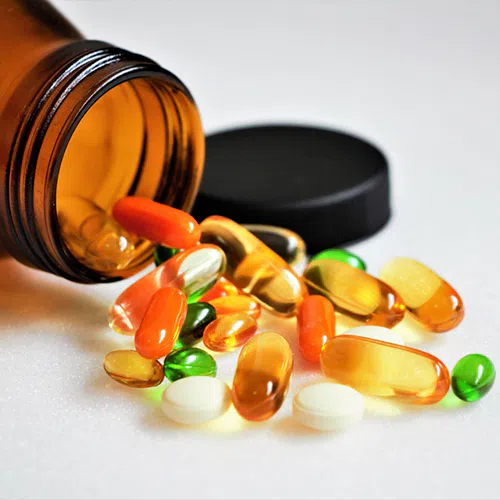
Over the past year, global health consumption has been shifting from "chasing new ingredients" back to "foundational nutritional science." In mid-July, an international health retailer released its 2026 Health & Wellness Trends Report, revealing five key trends: 1) fiber has become a foundational health category; 2) liver health is moving from occasional detoxing to everyday maintenance; 3) patented/trademarked ingredients are becoming marks of quality trust; 4) transparency is becoming a competitive advantage; and 5) flavor innovation is changing the supplement experience.
The data signals are clear: the report shows that, driven by the hashtag #fibermaxxing on a short-video platform, that platform's fiber category sales grew 20% year on year, searches for psyllium husk surged 150%, and searches for fiber gummies jumped 90%. Consumer mindset is simultaneously diverging - 70% of Gen Z are troubled by "health FOMO (fear of missing out)," while 44% of respondents want to simplify their health routines and return to basics. This seemingly contradictory yet actually coherent picture points to one conclusion: consumers are moving from blindly following trends to making evidence-based, savvy choices.
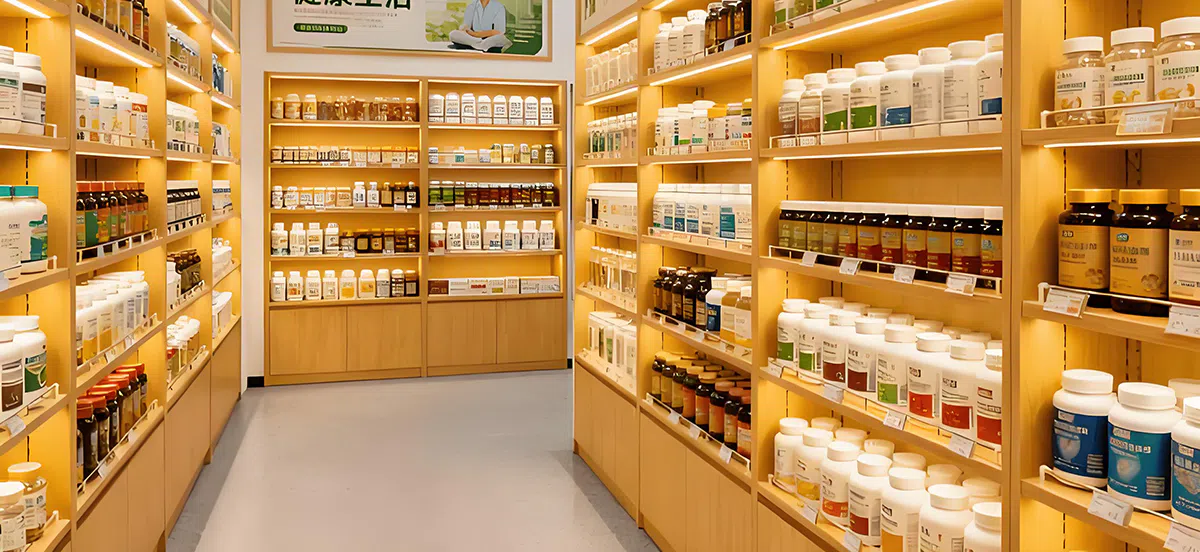
1. Dietary Fiber Returns: From "Laxative" to Foundational Nutritional Science
Who would have thought that, in an era full of superfoods and cutting-edge ingredients, the top crown in nutrition would go to fiber - the most basic of nutrients? The report points out that fiber is upgrading from the stereotyped label of "a laxative for the elderly" to a foundational category covering gut health, weight management and blood sugar regulation.
Behind this "fiber renaissance" are three forces working in sync: gut health moving from a scientific concept to occupying consumer minds (through ongoing education on the microbiome and the gut-brain axis); the ripple effect of the GLP-1 drug boom (people not on these drugs turning to high-fiber foods and supplements as natural alternatives); and a back-to-basics consumption philosophy (44% want to simplify routines and return to well-evidenced foundational nutrition).
Psyllium Husk
Psyllium husk is the absolute star of this report, with searches surging 150% - it is also the representative of viscous soluble fiber. Rich in arabinoxylan, it absorbs water in the gut and forms a gel, primarily supporting regular bowel movements by increasing stool bulk and softening stools. Its evidence base is the most solid among soluble fibers.
Boundary note: psyllium husk's weakness lies in taste and mixing experience - it is highly viscous and gritty, and must be taken with adequate water, otherwise it increases the risk of swallowing difficulty and gut discomfort. More importantly, it is a mixture derived from plant seed husks, commonly registered under 8063-16-9, but has no single-molecule CAS. When purchasing, request SDS and physical-chemical specifications (particle size, swelling power, purity) from the supplier, and confirm source and pesticide-residue compliance.
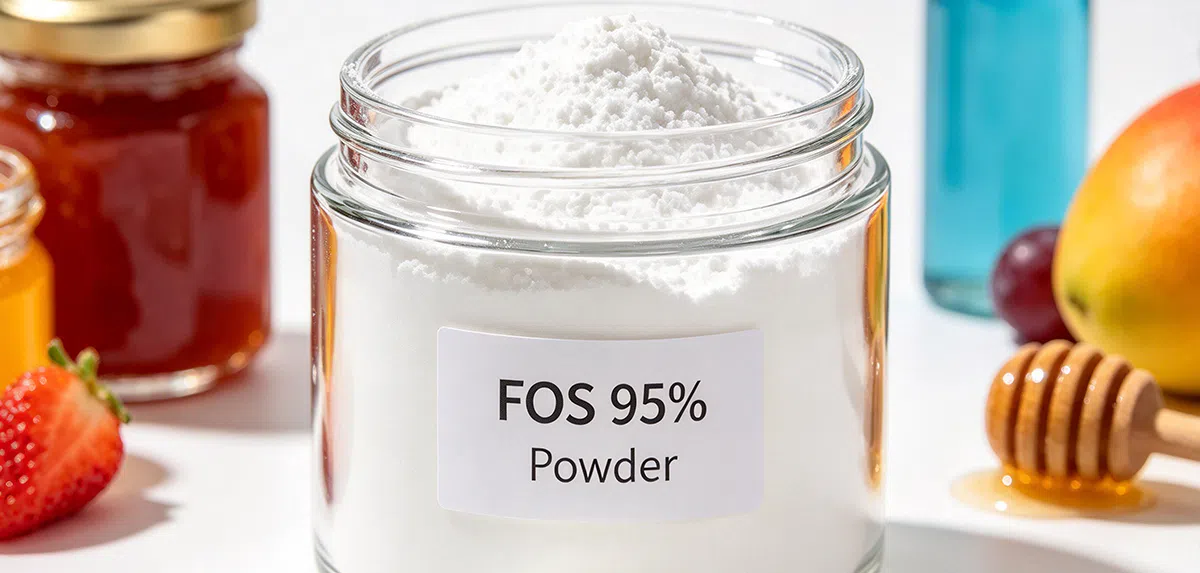
Fructo-oligosaccharides (FOS), Inulin and Resistant Dextrin
These three form the mainstay "prebiotic + water-soluble fiber" combination, and are among the fastest-growing segments in the fiber track. FOS and inulin are fructo-oligosaccharides/fructans that are not broken down by human digestive enzymes but can be selectively fermented by bifidobacteria; resistant dextrin is produced from starch through acid-heat and enzymatic conversion, and is known for "high solubility and low bloating," enabling high-dose addition to beverages and meal replacements without affecting taste.
Trend worth watching: fiber is upgrading from a "filler" to an independent product line, expanding simultaneously in sugar-control meal replacements, sugar-free baking and probiotic formulations; its gelling properties also make it popular in new dosage forms such as gummies and jellies. A common formulation is the "long- and short-chain compound prebiotic" (inulin + FOS + xylo-oligosaccharides), providing a graded food supply for strains.
Counterintuitive fact: FOS and inulin are both mixtures; their commercial general CAS numbers are 308066-66-2 and 9005-80-5 respectively. When purchasing, be sure to verify the specific degree of polymerization and component ratios - do not treat "FOS" as a single compound.
2. Liver Health Goes Daily: A Daily Necessity in the Metabolic Era
If fiber represents a return to basics, then liver health moving from a niche track to the mainstream reveals a shift in health consumption from "repair after the fact" to "prevention before the fact." The report notes that consumers are moving beyond the short-term concept of "cleanses" and treating liver health as a core strategy for long-term metabolic health and vitality.
Two driving forces lie behind this: metabolic health becoming the central theme connecting everything (the liver is deeply involved in sugar, lipid and protein metabolism); and the "punk wellness" younger generation becoming the main force of everyday liver care (staying up late, high-fat/high-sugar diets, frequent drinking - consuming while compensating). This has elevated traditional liver-care ingredients such as milk thistle, dihydromyricetin, NAC and choline from the role of "detox filter" to everyday maintenance tools for the entire metabolic system.
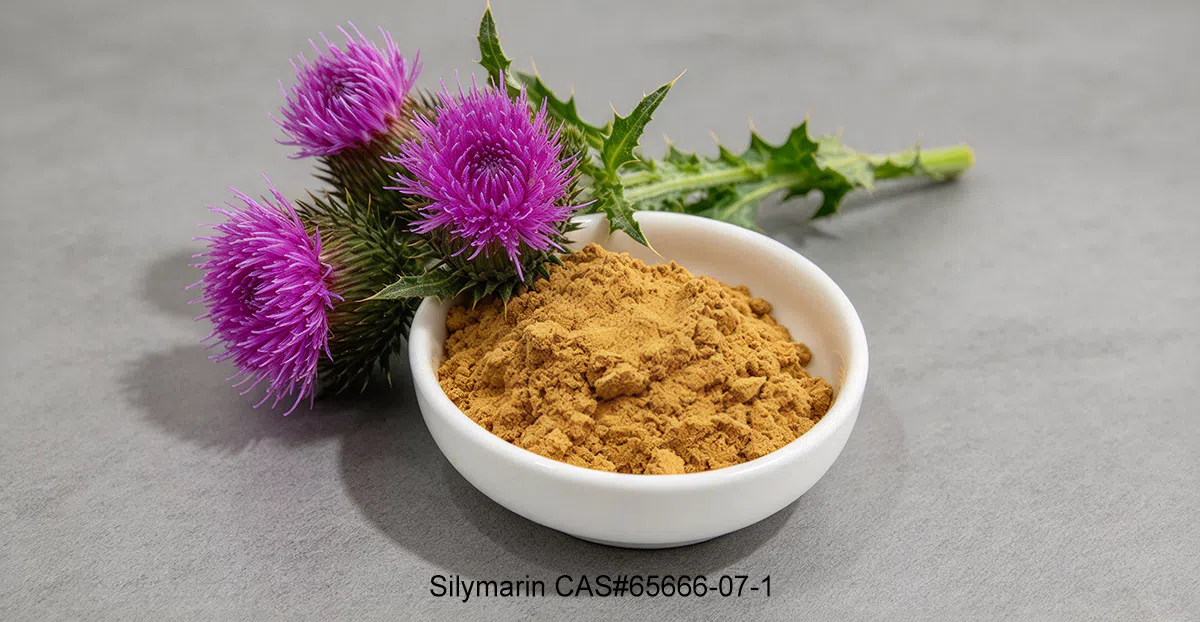
Silybin
Silybin is the most active flavonolignan component in milk thistle (Silybum marianum) extract, and usually exists in the form of silymarin (a mixture of multiple flavonolignans). Its core mechanism is antioxidant activity and regulation of the oxidation-reduction balance in the liver, along with supporting cell membrane stability - making it the most recognizable member of liver-care formulations.
Formulation point: silybin has poor water solubility and low oral bioavailability; high-end products on the market commonly use phospholipid complexes (such as silybin-phosphatidylcholine complex) to improve absorption. As an active component of an extract, procurement must clarify whether the product is "silymarin" or "silybin," as well as the standardized content (e.g., silybin ≥ a certain percentage), to avoid mistaking mixture content for monomer content. CAS 22888-70-6.
Dihydromyricetin
Dihydromyricetin is a dihydroflavonol derived from vine tea (Ampelopsis grossedentata), which has rapidly gained popularity among young consumers in recent years for its triple properties of "liver protection, hangover relief and antioxidant." Mechanistic studies show it can modulate the activity of ethanol-metabolism-related enzymes, scavenge free radicals, and participate in antioxidant defense at the cellular level, making it a frequent choice for the "consume while compensating" crowd.
Boundary note: the "hangover relief" narrative of dihydromyricetin has been significantly amplified on social media, but its human evidence remains focused on metabolic-enzyme modulation and antioxidant effects; it cannot be equated with "liver treatment." As a plant-derived monomer, procurement should confirm the botanical source, content specification, and that pesticide residues/heavy metals are within compliance limits. CAS 27200-12-0.
N-Acetylcysteine (NAC) and Choline
NAC is a precursor amino acid of glutathione; by supplementing cysteine it supports in vivo glutathione synthesis and participates in the thiol metabolism pathways of antioxidant and detoxification processes. It is a common member of liver-health and respiratory-health formulations. Choline is a methyl donor and key nutrient in lipid metabolism, involved in hepatic fat transport; deficiency is associated with fat accumulation in the liver.
Compliance note: NAC has faced regulatory debate over its "dietary supplement identity" in some markets; before exporting as a raw material or listing it, first confirm the compliance identity and limits in the target market. Choline is commonly supplied in salt forms such as choline chloride and choline bitartrate; procurement must specify the salt form and elemental choline equivalent. CAS numbers are 616-91-1 and 62-49-7 respectively.
3. Ingredient Branding: Trust Shifts from the Finished Product to the Raw Material
The balance of power in the consumer market is tilting: consumers used to be loyal to finished-product brands on the shelf, but now their eyes penetrate the packaging straight to the ingredient list. The report points out that patented/trademarked ingredients that once stayed behind the scenes - such as high-purity creatine, standardized ashwagandha extract and patented peptides - are becoming "super symbols" that drive purchases.
For B2B raw-material procurement, this means: a patented/trademarked ingredient represents a complete standardized production process, traceable sourcing, clinical literature and stable efficacy. Partnering with leading raw-material suppliers is essentially "trust by proxy." Note, however, that plant extracts such as ashwagandha are mixtures without a single CAS number; their value anchor lies in standardized extracts (e.g., ashwagandha standardized extract retaining 5% withanolides). Creatine, by contrast, is a single compound, CAS 57-00-1; differences between production processes (such as high-purity fermentation creatine) mainly appear in purity and control of heavy metals and residues.
4. Transparency and Flavor: Dual Upgrades in Supply Chain and Experience
The report distills "transparency" into a decisive competitive advantage for brands - it has moved from the 1.0 era of "listing all ingredients on the packaging" to a 2.0 era requiring demonstration of "full-chain evidence from raw-material origin to the consumer's hands." Third-party certification, non-GMO verification and batch test reports (COA) have become the "insider language" consumers use to filter brands.
For upstream raw-material suppliers, this translates directly into hard requirements: full-chain traceability, batch COA, and multi-country organic/compliance certifications are no longer bonus points but entry thresholds. Flavor innovation (gummies, cross-brand collaborations, new dosage forms) then pulls the competition, after "democratizing efficacy," onto the level of sensory experience - only products that taste good earn repurchases. For formulation R&D, the implication is: while ensuring raw-material purity and evidence-based backing, dosage form and palatability have become decisive variables for product success.
5. Combination Trends and Potential Raw Materials
Combination logic: current formulations are shifting from "supplementing one thing" to "building an ecosystem." Typical combinations include - fiber + liver care (psyllium husk/resistant dextrin + silybin, targeting "everyday maintenance + metabolic support"); liver care + antioxidant (silybin + NAC + glutathione, thiol antioxidant synergy); and ingredient branding + minerals (creatine + magnesium, for sports and brain-health scenarios).
Potential raw materials beyond the popularity list: curcumin (CAS 458-37-7, whose core 2026 narrative is the bioavailability breakthrough - micelles, liposomes, piperine synergy - moving from general anti-inflammation to precise scenarios); glutathione (CAS 70-18-8, where oral stability and absorption are the technical focus); precise forms of magnesium (magnesium glycinate is gentle, magnesium threonate can cross the blood-brain barrier to target brain health); and "cellular anti-aging" newcomers such as ergothioneine and urolithin A. Together, these ingredients point to one direction: evidence-based, traceable, perceptible.
Disclaimer
This article is provided for industry information reference only and does not constitute medical advice, diagnosis or product recommendations. The use of nutritional supplements should be based on individual health conditions and carried out under the guidance of professional medical personnel. Individual responses to various ingredients may differ, and actual results vary from person to person. The chemical raw materials mentioned herein are for R&D and procurement reference only; specific compliance identity, usage limits and label claims must be subject to the regulations of the relevant market and professional advice.


