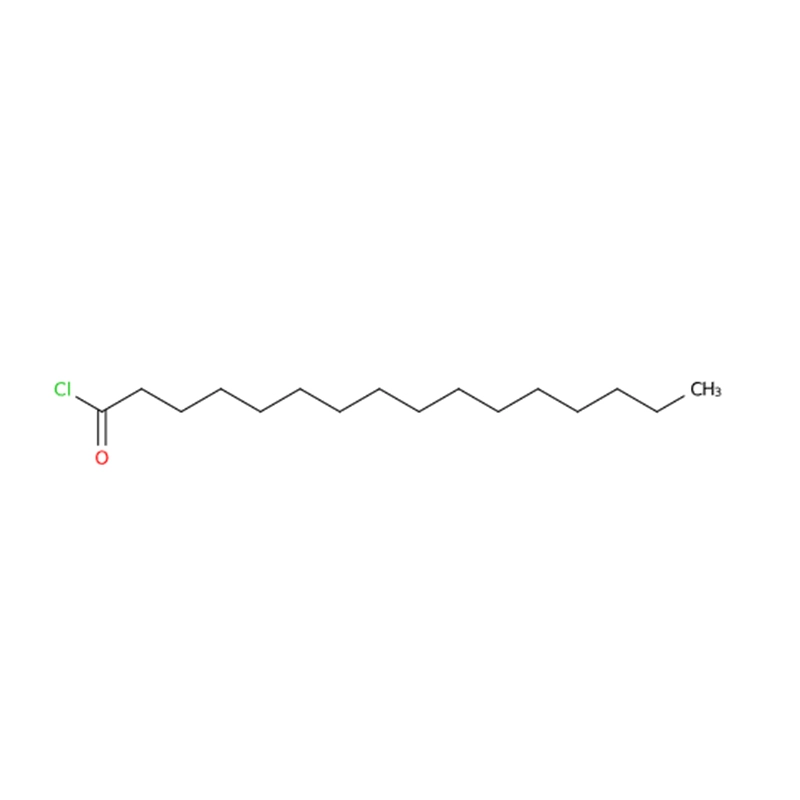
Product Description of Palmitoyl Chloride CAS#112-67-4
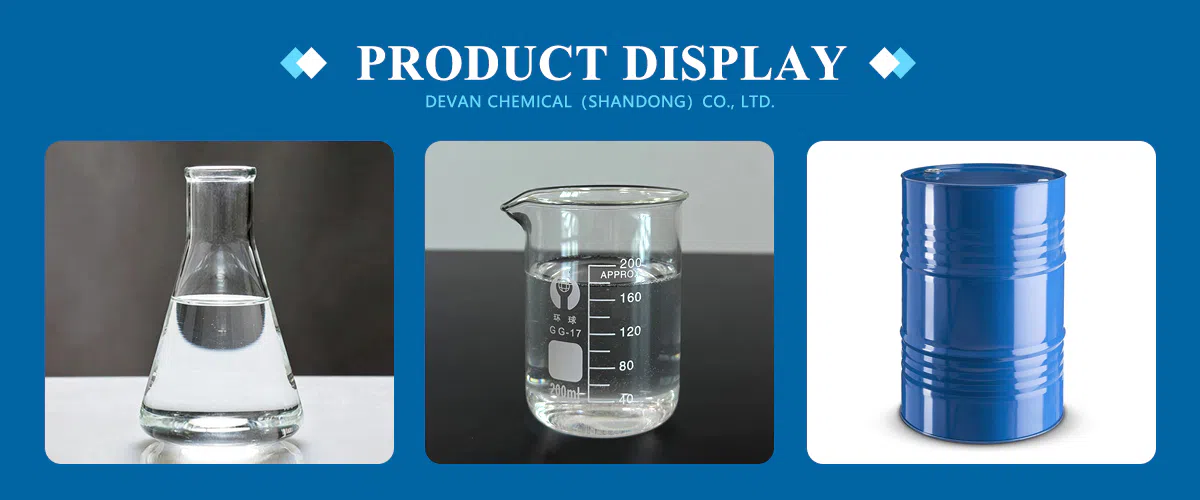
Palmitoyl Chloride, molecular formula C₁₆H₃₁ClO, also known as hexadecanoyl chloride, belongs to long-chain acyl chloride series. It appears as colorless to pale yellow oily liquid with a sharp irritating odor. Its melting point is 11-12°C, and the density is 0.906 g/mL at 25°C. This product is highly moisture-sensitive. It will undergo rapid hydrolysis once exposed to water, generating palmitic acid and corrosive hydrogen chloride gas. It is miscible with ether, benzene and many other organic solvents, while reacting violently with alkaline materials. As a highly active acylating reagent, it is widely adopted as an intermediate for fine chemical synthesis.
Palmitoyl Chloride Chemical Properties
| Melting point | 11-12 °C (lit.) |
| Boiling point | 88-90 °C/0.2 mmHg (lit.) |
| density | 0.906 g/mL at 25 °C (lit.) |
| refractive index | n20/D 1.452(lit.) |
| Fp | >230 °F |
| storage temp. | Store below +30°C. |
| solubility | Chloroform (Sparingly), Ethyl Acetate (Slightly) |
| form | Liquid |
| Specific Gravity | 0.905 |
| color | Clear |
| Water Solubility | Decomposition |
| Sensitive | Moisture Sensitive |
| BRN | 972409 |
| Stability: | Moisture Sensitive |
| CAS DataBase Reference | 112-67-4(CAS DataBase Reference) |
| NIST Chemistry Reference | Palmitoyl chloride(112-67-4) |
| EPA Substance Registry System | Hexadecanoyl chloride (112-67-4) |
| Hazard Codes | C |
| Risk Statements | 14-34-29 |
| Safety Statements | 26-36/37/39-43-45-8 |
| RIDADR | UN 3265 8/PG 2 |
| WGK Germany | 1 |
| F | 46286 |
| TSCA | Yes |
| HS Code | 2915 90 70 |
| HazardClass | 8 |
| PackingGroup | II |
| Hazardous Substances Data | 112-67-4(Hazardous Substances Data) |
| Toxicity | LD50 orally in Rabbit: > 2000 mg/kg |

Product Application of Palmitoyl Chloride CAS#112-67-4
Palmitoyl Chloride is a vital acylation intermediate in fine chemical industry. It is commonly used to introduce palmitoyl groups for synthesizing surfactants and emulsifiers, which are widely applied in personal care and daily cleaning formulations.
In pharmaceutical manufacturing, it participates in the modification of drug molecules to adjust lipophilicity and improve product bioavailability. It can also be used to produce lipid derivatives and amide compounds for polymer and coating additives. Moreover, this acyl chloride reagent works in laboratory organic synthesis and agrochemical intermediate preparation.